Stella’s spiritual identification with Anne Frank
Midwinter BreakStella’s spiritual identification with Anne Frank takes shape during a visit to the Anne Frank House, where Stella sees visitors’ tokens on a mantelpiece and leaves her eternity earring among them. She is drawn to Anne’s yearnings and to the suffering of a young life cut short, yet she also questions her right to make the gesture because she is not Jewish and has not shared the family’s persecution. The connection is therefore neither a claim of sameness nor a simple act of pity: Stella makes an offering while acknowledging difference, and describes the bond she feels as solidarity in common humanity.
The encounter at the Anne Frank House
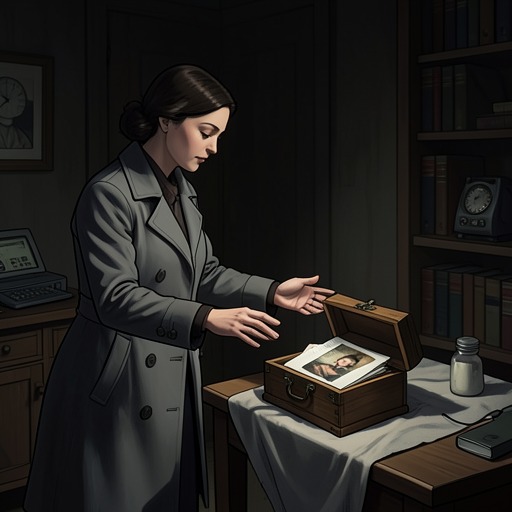
Stella’s response begins with a small, informal line of objects on a mantelpiece. After recalling the ending of Schindler’s List, where pebbles are placed on gravestones as tokens, she sees the objects as a salute to people who have suffered. Gerry leaves the room, asking whether she wants coffee; when he turns around, Stella is no longer with him. She stays behind alone, attending to the tokens and deciding that she, too, wants to contribute something to the dead and wounded.
The place gives that decision a specific focus. Stella thinks of Anne Frank, whose death in a concentration camp resulted from her Jewishness, and of the yearnings she recognizes in Anne. The suffering surrounding Anne’s death, Stella reflects, is almost unimaginable and is not described in the material she has just seen. Her response joins the physical evidence of the house and its pictures of Anne to an inward recognition: a visitor’s token can acknowledge a life and its loss when words do not suffice.
The earring as offering
Stella removes an earring, its keeper falling into her cupped hand. It is a tiny golden eternity ring, and the word eternity carries an older weight for her: as a ten-year-old she had been terrified by the idea of endless time, unable to imagine reaching its end or to make sense of counting to a million. The Catechism’s language of everlasting life had made eternity vivid and frightening. The object she places on the mantelpiece thus carries a personal history as well as the meaning she gives it in this room.
She reattaches the keeper and sets the earring at the end of the line of tokens. The ring rocks briefly, then becomes still. Stella bows her head and prays, but understands the act less as a conventional prayer than as an expression of gratitude, appreciation, and solidarity. Her inward address imagines two people joined across difference: Anne, a girl who died young, and Stella, an old woman who survived. In that contrast, the earring becomes an offering from one life to another, not an attempt to make their experiences equivalent.
Gerry waits in the hallway, beside the worn stair treads used by the Frank family and others before them; the hollows in those stairs have been sealed behind Plexiglas, while tourists use a newly built staircase. When Stella is ready, Gerry touches her arm through her coat, and she seems still to be in another world. Later she explains that the tokens and what she had seen in the house moved her to leave something. She names the earring plainly. The account confirms the deliberate nature of the act: it was not an object lost or casually abandoned, but Stella’s chosen contribution.
Kinship without a claim to sameness
Afterward, Stella questions the legitimacy of her offering. She says she should not have left it, calling the act arrogant in view of what the family endured. She is not Jewish and has not been involved in suffering like theirs; she resists treating pain as a membership category in which she might claim a place. Her self-reproach sharpens the distinction between recognizing another person’s suffering and claiming it as one’s own.
That hesitation does not cancel the solidarity she felt in the room. Stella’s identification rests on acknowledged difference: Anne’s Jewishness and death in a concentration camp remain particular to Anne, while Stella recognizes yearnings and human vulnerability that cross that distance. The gesture answers suffering with attention rather than equivalence. Her offering is also modest in scale—a single earring among small tokens—and its meaning depends on the private intensity with which she places it there.
Care beyond the memorial room
The scene belongs to a wider pattern in Stella’s relationships, though the book does not present her connection with Anne as identical to her marriage. In conversation with Gerry about their long relationship, Stella describes a division between the person who tends the work and the person who displays. She contrasts his building, which may endure for centuries, with her recurring tasks: cooking, washing dishes, hanging sheets, and paying household bills, all of which must be done again. Her reference to the dishes and ironing makes the imbalance concrete. Care, in her account, is sustained labor, much of it repetitive and easy to overlook.
At the airport, Stella considers whether Gerry’s drinking can change and whether she can make room for him in her life if he becomes sober. She wonders whether the trauma of what happened to her in Belfast also wounded him, and whether his drinking could somehow be her fault; these questions complicate rather than settle her decision. She thinks that having someone matters, but does not want to become a scold or keep granting chances by habit. Later, she offers to help Gerry love himself again, takes his hand as he covers hers, and says that they should cherish one another. Her suggestion that he bring her flowers gives that appeal a tangible, everyday form. These moments illuminate Stella’s practice of care while preserving the particularity of the Anne Frank House offering: there, too, attention becomes meaningful through a concrete gesture, but it begins with the recognition that another person’s suffering is not hers to possess.